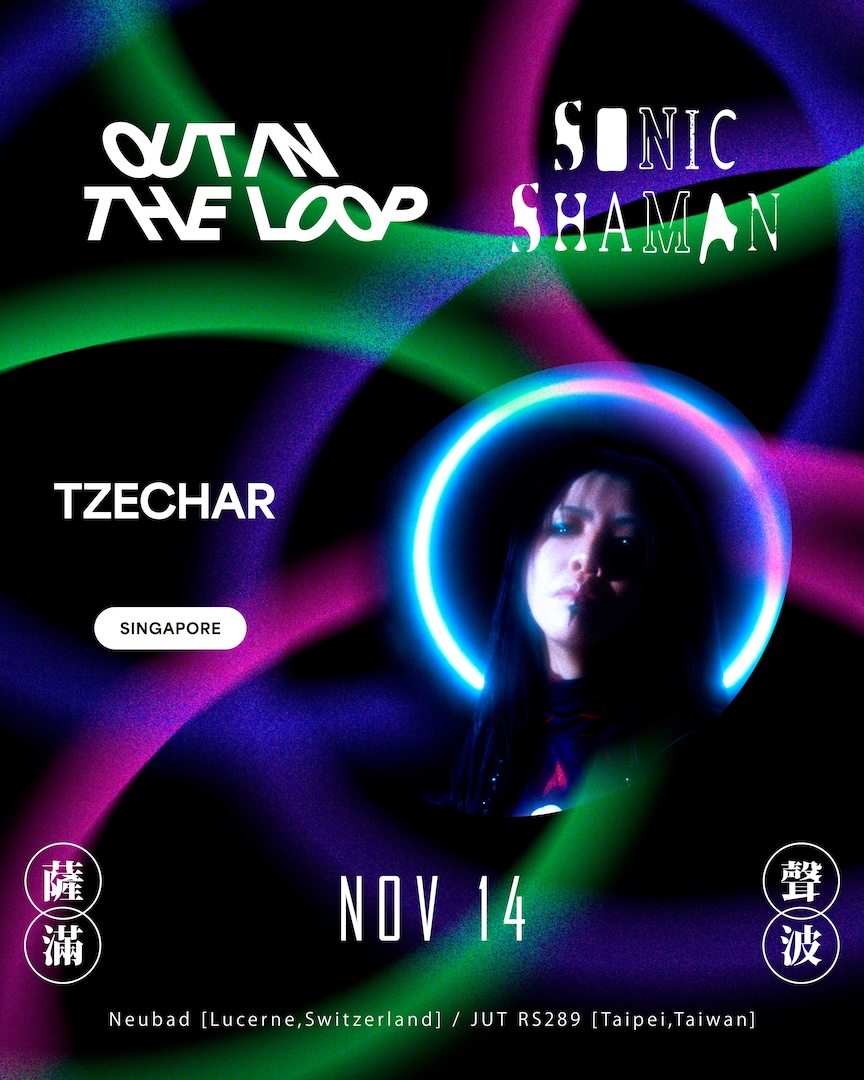
TZECHAR
TZECHAR are a Singapore/Melbourne-based multidisciplinary audiovisual duo working across experimental music, live performance, sound design, moving image, immersive installation, and film scoring. Their work is deliberately post-genre, treating familiar musical and cultural vocabularies as materials to be borrowed, subverted, distorted, and recombined rather than fixed categories. Across mediums, their work is a hyper-reflection of reality as-is, intensifying the existential, absurd, and poignant systems through which people survive the horror of being alive.
Often using familiarity, subversion, overload, and pattern-break as compositional tools, TZECHAR create works that shift between experimental concert, audiovisual performance, installation, and art-rave formats. Their wider practice includes scoring Rob Jabbaz’s cult horror feature The Sadness and the upcoming Hollywood adaptation of Crossed, alongside evolving live audiovisual works.
About the Performance: Mother Abyss 母渊
Mother Abyss is a live audiovisual performance about embracing the void without surrendering to despair.
Nihilism is not inherently negative. It is simply the condition we live in. We arrive, invent religions, markets, jobs, identities, ambitions, and countless rituals to make sense of being alive, then eventually return to where we came from.
Moving through English, Mandarin, and Teochew, Mother Abyss pulls these rituals apart through industrial noise, experimental pop, avant-garde metal, deconstructed club, devotional song, traditional Chinese music, and cinematic sound. Tenderness sits beside aggression, sincerity beside stupidity, prayer beside corporate mantra.
Sound, image, light, and live performance merge into a single unstable organism. Sometimes it screams, sometimes it prays, sometimes it dances. Eventually, everything returns to the abyss.