
Sesuatu yang nyata, sesuatu yang diabaikan (That is real, that is ignored)
Julian Abraham “Togar” + Oni Imelva
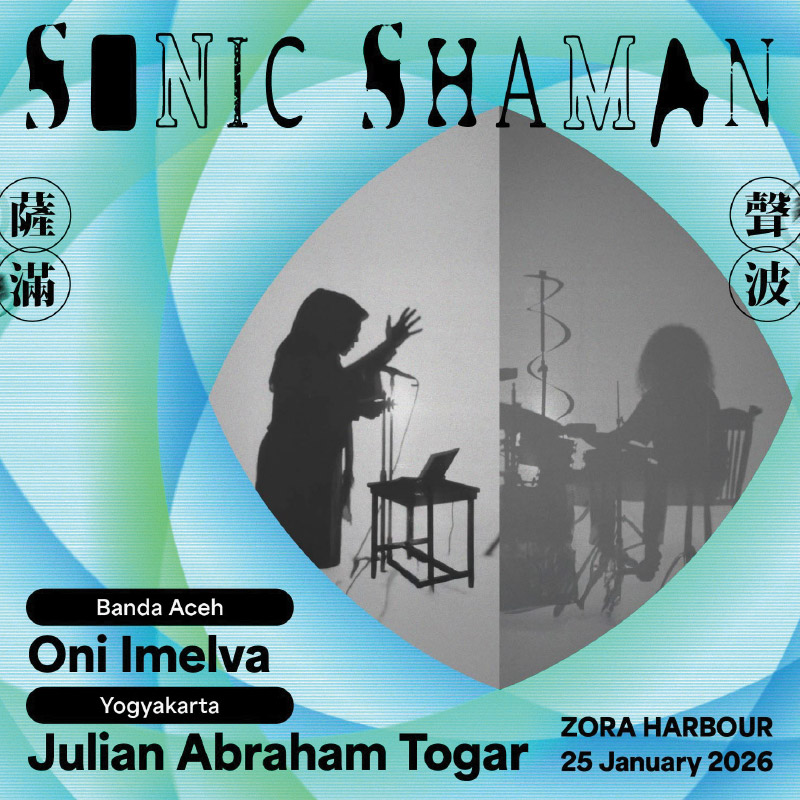
We begin with sound: unruly, unbound, and plural. Artist-cum-drummer Togar and human rights advocate-cum-vocalist Oni, who brings her voice, memory, and experience from Aceh brings together sonic gestures across geographies and temporalities into this live jam. Between percussion and voice, hikayat becomes both method and resistance: a way to listen where the state forgets, and to remember where history falters. Part ritual, part assembly, this session is a jam in the truest sense: a space of contact, refusal, listening, and co-presence.
The automated percussion system AADC (Acoustic Analogue Digitally Composed)—visible behind the projection screen—extends this dialogue. It plays back, repeats, and interrupts, its rhythms automated yet responsive, blurring the lines between machine and body, echo and memory. Against the steady pulse of Togar’s drums—part heartbeat, part call to witness—Oni weaves stories of courage and recurrence: the widow-warriors of Laksamana Keumalahayati’s Inong Balee fleet, the unrevoked 1873 Aceh War declaration, the erased histories of Aceh’s sultanahs, and the long silence surrounding sexual violence as a weapon of war.
Tied to Figures, Dedications, and Civilisations, this performance doesn’t aim to illustrate history, but to unmoor it—to make it vibrate. Sound becomes a sculptural medium in itself: temporal, spatial, political.
Julian Abraham “Togar” (Yogyakarta) is a multidisciplinary artist, musician, and social researcher. His work blends active listening, programming, and performance to explore the infrastructures of sound and its entanglement with colonial histories, environments, and daily rhythms.
Oni Imelva (Banda Aceh) is a traditional epic narrator, singer, social worker, and human rights advocate from Aceh. Currently Vice Chair of the Aceh Truth and Reconciliation Commission (2022–2027), she brings deep knowledge of oral tradition, grief, and survival—especially in the wake of the 2004 tsunami—into poetic and civic action.
Image Credit: Courtesy of the artist